
Love = Boundaries + Acceptance
Interactions with my beloved family in small doses

I don’t see my family very often. We are all spread out, spread thin with our individual work, and absorbed in our own dramas. But we stay in touch, speak frequently over the phone, and see one another at least once a year. This year, I was blessed to see them once in the spring when my son graduated college, over the summer while I collected data for a research project and gathered my brother’s story, and for the third time last week.
When I arrived in Colorado for Thanksgiving, I held my usual excitement and slight feelings of trepidation. Most of that trepidation had nothing to do with my family and everything to do with the weather. Colorado is cold in November, and usually snowy. I am not a fan. Some people love living where they get all four seasons. I love living in Southern California.
“Heidi, you have to try my Hash Can!” my brother insisted over a conference call with me, his girlfriend, and our mother. I was on the second day of my road trip to Wellington, Colorado and had stopped for gas that was blessedly nearly two whole dollars less a gallon than what I was accustomed to paying.
“I dunno, Sam,” I said, feeling torn. “That drink has a reputation.”
He laughed. “Yeah, you’re gonna get fuuuuuucked up,” he said. “Don’t worry, you can’t even taste the alcohol. But you’ll feel it.”
“I don’t actually like puking,” I tried to explain. “That does not describe a good time to me.”
“Just drink lots of water,” his girlfriend chimed in. “That’s what I do and I don’t puke.” This sounded reasonable.
Sam started listing the ingredients in the drink. I stiffened when he mentioned Red Bull.
“Sam, can we make mine with just, like, I dunno, half the amount of Red Bull? I can’t drink that stuff. It makes my heart hurt.” I didn’t want any, but this was probably the third time Sam had insisted I try this drink.
“Oh, they don’t use the whole can,” Mom chimed in.
I groaned and clarified. “Okay, well, however much they do use, I’d like half of that, please. I’m really sensitive to that stuff.” I took note of the fact that no one asked me if I wanted to try the Hash Can.
The fuel pump clicked off, and I returned it to its cradle before indicating that I didn’t want a receipt.
“How much longer you got, Mouse?” Mom asked.
“About five hours, I think,” I reported.
“Probably more like seven with the way you drive,” my brother jested.
“Nuh-uh,” I said, “I’ve discovered the gas pedal.”
Everyone laughed. I had noticed that I was more assertive on the road lately, swerving in and out of lanes as necessary to get to work on time the many mornings I left home late.
“Remember Heidi asking me to slow down to less than 85?” Sam asked the group. They laughed. “She’d watch my speedometer and say, ‘Sam, can you slow down please.’”
“And you would,” I pointed out. “And I appreciated it.”
“Or how she asked if I’d slow down?” his girlfriend added before laughing as if my request had been ridiculous.
I felt an ache in my gut that I hadn’t felt in a long time. But it was familiar. It dawned on me that I hadn’t felt this ache in a long time because I hadn’t spent time with my family since the summer, which is when I had requested that we not drive over 80 miles per hour.
This may not be the most reputable website, but it reflects simply the reason I’ve made this request:
70 MPH is the average speed limit on most US highways. It is also the speed at which a fatal car accident becomes practically inevitable. Such a crash carries as low as a 25% percent chance of survival. At 80, that number becomes drastically lower. - At What Speed does a Car Crash Become Fatal?
Anyway, it wouldn’t matter if I sent this website or any website to any of my family members. They would laugh my request off anyway.
Over the course of the next few hours of driving, I stewed over that uneasy feeling in my stomach. Why did it bother me so much?
It bothers you because your words don’t seem to matter. Your request to feel safe is not important to them—whether it’s because you don’t want to get so drunk you puke or you don’t want to be driving at such high speeds that your chance of surviving a crash are nearly zero.
It’s not that my family doesn’t care about me. I’ve never questioned whether they care about me or whether they love me. They do and always have, and I’ve always known that. But most of the stories that we share in jubilant reminiscence involve a direct violation to my sense of autonomy and/or safety.
One of my family’s most beloved stories to tell over and over again is how I came home from work one day and saw my brother and my husband sitting on the couch with a bag of Cheetos and smelling strongly of weed. I had a rule for my house that 1) smoking took place outside only and 2) no crumby food on the couch. When I yelled at my brother, he was so high that he didn’t register most of what I said.
“All I heard,” he said between giggles, “is ‘rant, rant, rant, Cheetos on the couch’.”
I can look back on this story now and laugh along with everyone else. But at the time, I felt betrayed, disrespected, and genuinely hurt. In fact, that night turned very dark for me. But that’s a story for a different time.
Live and Let Live
When I was younger, I tried with all the conviction in the world and zero effectiveness to change other people’s behavior. I did this, in my naive view, to help them.
Smoking was bad for you, so I asked my parents to stop smoking. I even destroyed a carton of their cigarettes. They were none too happy about that.
Drugs were bad, so I was taught in the ‘90s through the D.A.R.E. program. So, I begged my brother and my husband to stop smoking weed. (Please, dear reader, do not come at me on this one. I voted to legalize it because I didn’t want my loved ones to get in legal trouble).
Taking the Lord’s name in vain was bad, according to the very little religious indoctrination I had (which is extra laughable to me now that I’m a full-blown Atheist), so I’d correct people in my family who said “Goddammit!” and the like.
All in all—I was a buzzkill. A goody-two-shoes. A zealot. A stick-in-the-mud. Or I had a stick-up-my-ass, as my mother would say.
Telling other people how to live their lives was not earning me any friends.
And I wanted friends.
As a teenager, I quickly learned that you had to go along to get along. I started drinking, riding in cars with people who could give two shits if I lived or died, and sleeping with people who cared about the same. I made poor decision after poor decision.
But I never fully converted to a care-free existence. In fact, I was miserable. I felt split in two. There was the real me—the me that wanted to feel safe and heard and accepted for who I was. Then there was the me that was acting, putting on a brave face, and doing exactly the opposite of what I felt was right so that I’d be accepted instead of ridiculed.
Aaahh… I realized as I drove along I-70 towards Denver. There’s that old conflict.
I continued to think about how I wanted to handle this and reflected on a video I had come across one day when scrolling social media:
I had tried controlling my environment with rules while having very squishy boundaries because I wanted so badly to be liked.
*Whispers to self-* Low. Self. Esteem.
I also considered some of the wisdom from the Let Them Theory book I had listened to. Though I didn’t love the delivery, the message, as I said in this review below, is pretty helpful.

“Let them,” the author says. “Let them make the choices they choose to make. Then let me choose how I am going to respond or not.”
When Sam called me sometime later to bemoan still being stuck on his truck route and to check on my progress, I asked him a clarifying question.
“Bro, you want me to try the Hash Can drink because you’re proud of it and you want to share what you’re proud of with me, right?”
“Yeah!” he responded enthusiastically. “Just try it.”
“Okay,” I said, softening. “You can make me one. I’ll try it.”
I value making my brother feel valued. And since boundaries govern what I chose to do with myself, I decided I’d sip the drink and, if I didn’t want to keep drinking it, I wouldn’t.
In case you are wondering, he never made me the drink, and the issue never got pushed once I was there. He asked me to take a sip of his and I acknowledged that it was pretty tasty.
Lessons About Boundaries Growing Up
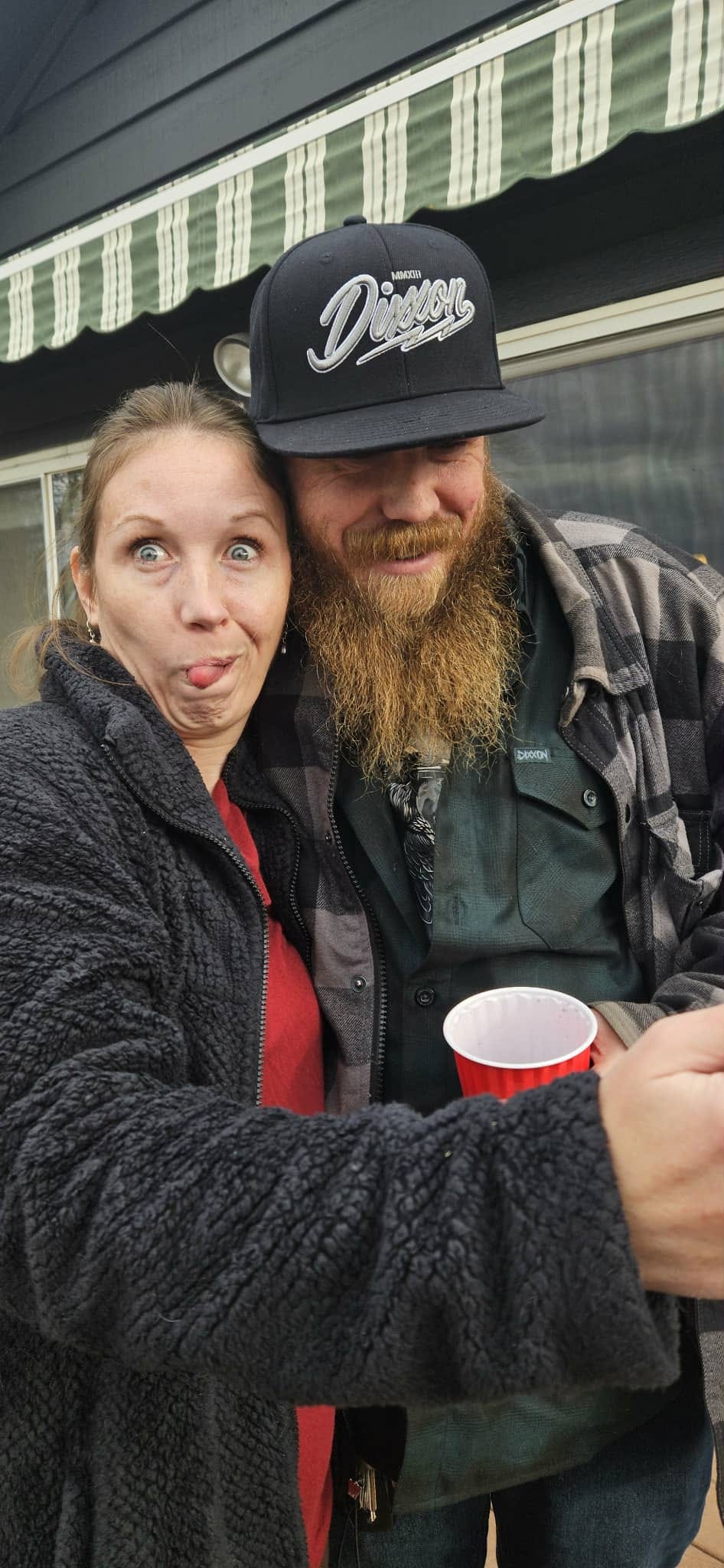
When I arrived at the house my brother had rented for our large family gathering, his girlfriend greeted me and showed me around the place. They had chosen a beautiful three-bedroom home on a lake, complete with paddleboat, canoes with rowers, and a closet full of board games and puzzles. We started talking about boundaries because her mother was there visiting, and she was experiencing her own familial frustrations. But she also contended with my brother’s usual lack of respect for her boundaries.
“I’m coming to realize,” I told her in what I hoped was an even tone, “that I grew up in a family where boundaries were rarely if ever respected.” I flashed back to times when my mother rearranged my books so she could laugh at me losing my mind trying to organize them again; at my father rolling his eyes and telling me I’m being ridiculous when I cried after being spanked; at my brother boxing me in the ear when he heard I had slept with someone he knew.
I know many people grow up in families like this. We look back and laugh. But the message is embedded just the same—your personal space, your belongings, your bodily autonomy do. not. matter.
And, if you insist that they do, you are being a buzzkill. Can’t you take a joke? Don’t be ridiculous.
Around the bonfire later, I sat with my brother and his girlfriend. His girlfriend asked him if he wanted to do something, he said no, and she pushed.
“We were just talking about boundaries,” I reminded her, feeling as though I was coming to my brother’s defense. “No means no, right? Show him how you want your boundaries respected too.”
My brother smiled wide and quickly interjected, “Yeah, but I kinda like it when she pushes.”
I threw my hands up and laughed. “Okay, never mind then!” That’s for them to figure out, I suppose. Let them.
A group of the younger children in the family wanted to take the paddle boat out on the lake but weren’t allowed to go without an adult. But none of the adults seemed to want to go. These weren’t my children, but I remembered what it was like to be told you couldn’t do something without an adult but not having any adult step up. So I volunteered to go out on the boat. I figured I’d benefit from the workout anyway after spending two days in the car.
“Go faster!” One of the children sitting in back insisted when we had paddled out to the middle of the lake. My nephew, sitting to my right, was in control of the direction the boat would go while the older child of one of my brother’s friends was helping me peddle on the other side of my nephew. My nephew had been overcorrecting the turns for the last few minutes, and we were basically spinning in circles in the middle of the lake, getting nowhere. My thighs were killing me.
“I need a break,” I breathed, accepting that I was old.
The kids played musical chairs, careful not to tip the boat. “It’s okay,” my nephew told the other children. “I know if I fall off, Heidi will help me.” This warmed my heart. I suddenly felt more energized and peddled us back to the dock where my jellied legs carried me back to the bonfire.
In the evening, we played a hilarious round of Cards Against Humanity followed by Loteria where my brother bragged that I knew multiple languages. “Bro, I learned all my Spanish from you!” I reminded him.
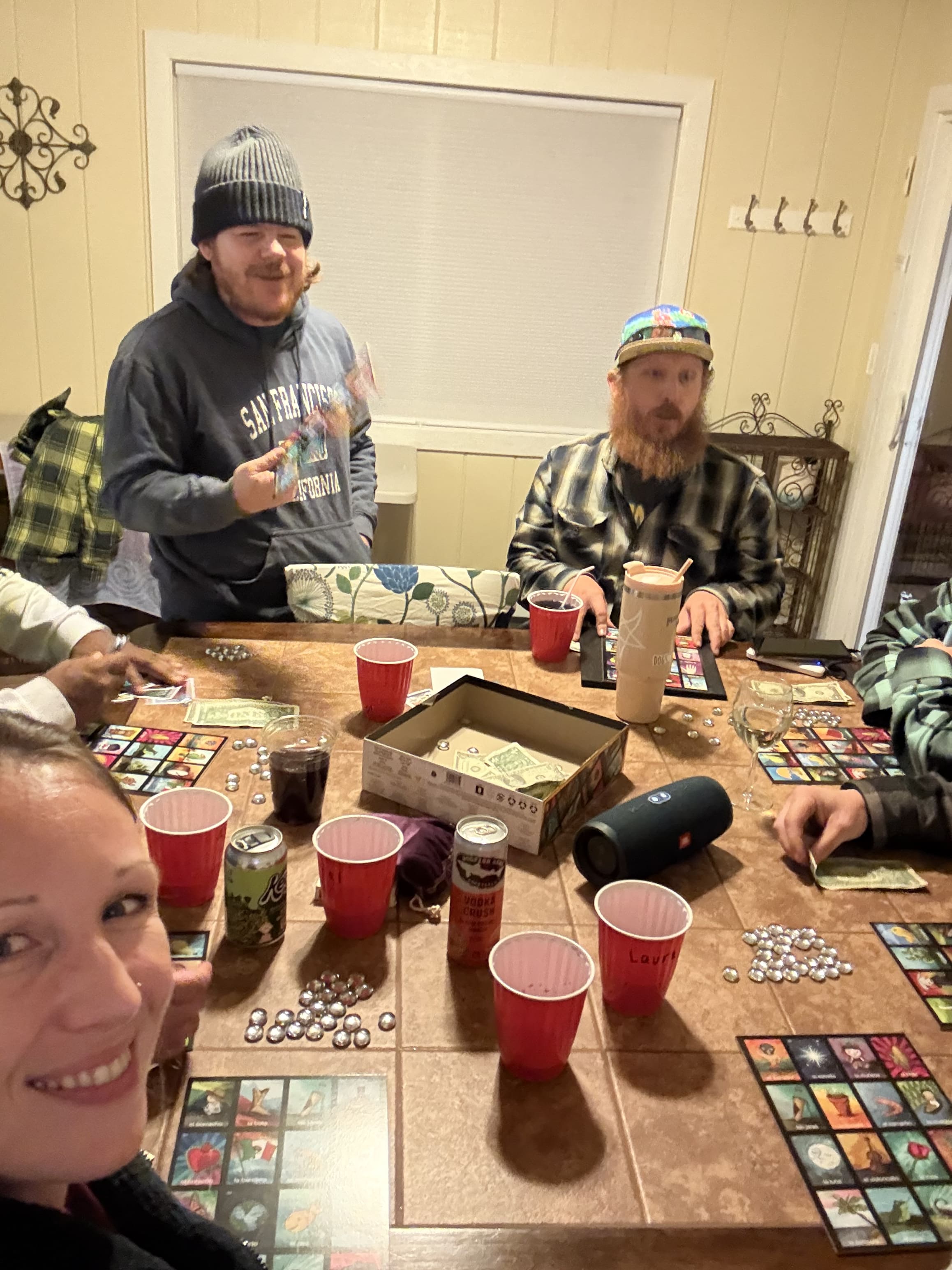
We stayed up late into the night, swapping stories. My brother’s friends joined Sam in retelling tales of bravado in which people got badly hurt. “I’ve got it on video,” one of his friends said.
“That’s okay,” I quickly responded. “I don’t much like seeing violent things.”
“Yeah, she doesn’t even like to watch boxing,” my brother said, “she’s not like me.” It felt good to hear him say this matter-of-factly. No ribbing. No calling me unflattering names. Just filling in a gap for someone who had just met me.
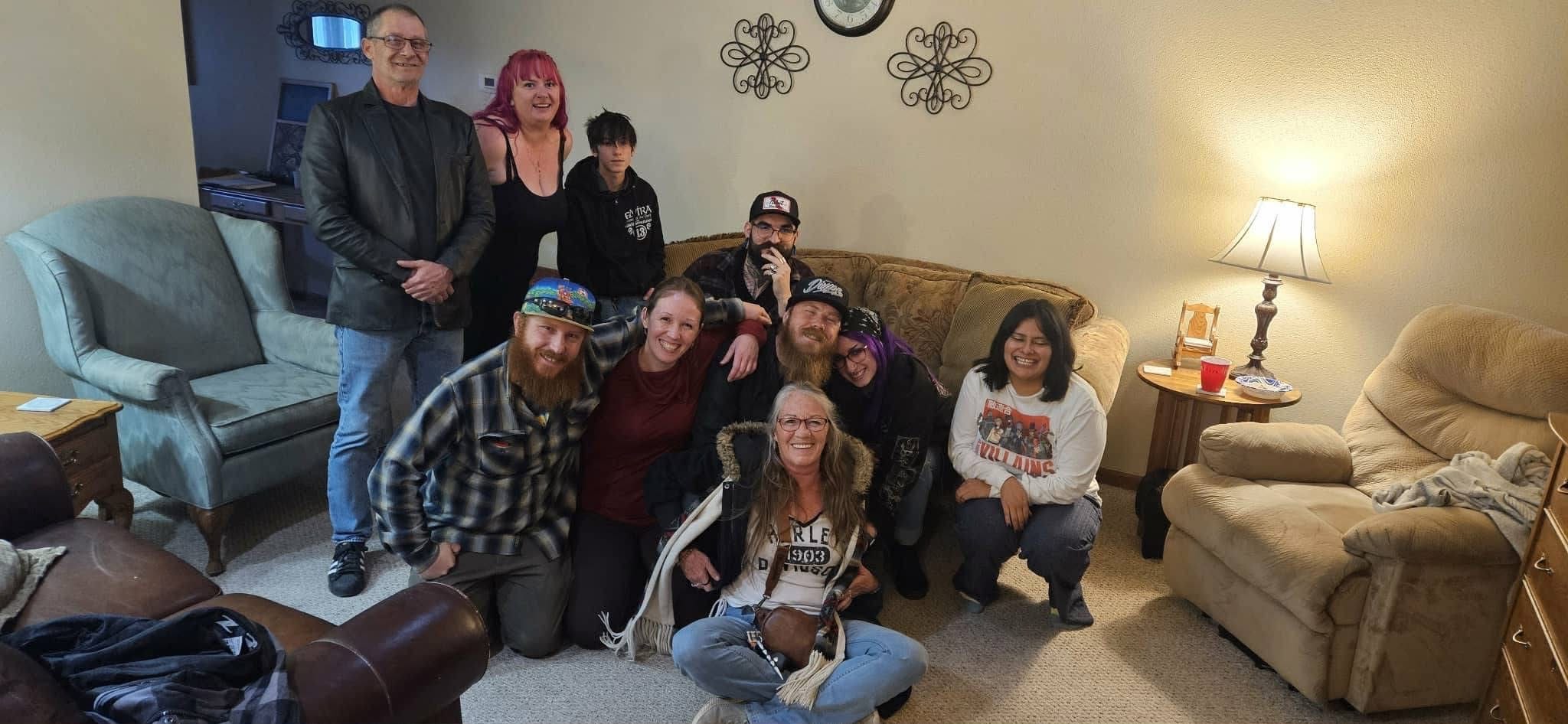
“I’m surprised you went out on the boat,” my mother said later.
I smiled. “It was fun, actually.” It had been tiring, but I chose to go out there. No one pressured me. And the kids had a good time.
“Perhaps,” I would say to my mother later while we reheated leftovers in her kitchen, “I didn’t have a stick up my ass. Perhaps I was just a sensitive child being told there was something wrong with me for being sensitive.”
“I’m sorry, Mouse,” she said.
“Thanks, Mom.” I said back.
She looked uneasy.
“That’s all I needed,” I reassured her. “Seriously, that helps.”
Friday night, my mother invited me to join her and her fiancé Bob at their friend’s house for dinner. I’d heard mom talk about her Friday night gatherings and looked forward to meeting people who appreciated my mother’s wit and dark sense of humor.
The night did not disappoint, in that regard. The older ladies welcomed me, and Mom sat in the corner, looking comfortable and happy. I loved seeing her this way.
They had a giant bong on the table between them and all of them, including my mother, lit cigarettes, too. We were sitting in a garage which quickly filled with smoke with which I had no interest in filling my lungs. But I wanted to be there. I wanted to spend time with light-hearted people, just hanging out as they did. I tucked my nose into my sweater and took a deep breath.
After a few minutes, the hostess motioned for me to open a side door to let in a little fresh air “for those who don’t smoke.” I thought this was kind and appreciated her gesture.
“Is this bothering you?” one of them asked.
“No, I’m used to it,” I reassured. “Both my parents smoked as I grew up and before them, my grandparents did too.”
Mom quickly explained how we had lived with her parents for a short time when I was little.
“You’ll probably get a contact high,” Bob laughed as he passed a joint across from me to a man sitting on my other side.
I shook my head. “Nope, used to that too! My husband smoked weed all the time.”
I was used to finding a way to be comfortable in environments that didn’t fit me so that I could spend time with the people that I loved. I hoped that dipping my nose into my sweater didn’t come off as passive aggressive.
After the hostess went inside to finish preparing dinner, the smoke started being a little too much and I ducked inside to see if I could be of any help in the kitchen. She warmly told me that she had made a posole for me since I didn’t eat ribs.
“Um,” I hesitated, “is it spicy? I like posole, but it’s usually got a kick to it I can’t handle.”
She shrugged, “I don’t think it’ll be too bad, here,” she motioned a spoonful of it towards me, and I quickly backed up.
“No, I’m sorry,” I said, “Can someone else try it first? My throat starts to close if there is any spice. I’ve developed some sort of allergy to peppers, I think.” This very annoying reality is all the more shameful since I’m from New Mexico.
She served the spoonful to her friend who, after pondering her response for a moment, said, “I don’t think it’s that bad. It’s got a little kick, but it’s not that bad.”
I frowned. “Thank you. Unfortunately, that means I shouldn’t have it. I really have no tolerance.” The hostess shrugged it off and didn’t say anything. I was acutely aware that I might come off as ungrateful, or rude. But no one said anything to make me feel this way.
“You know, I have to just take some antacids because I get bad heartburn nowadays,” my mother said as she piled her plate with ribs while I loaded my plate with mashed potatoes and a salad that was bought after my mom told her friend I was vegetarian.
“Mom, my throat closes,” I reminded her. “I can’t even get the spicy food down to my gut to give me heartburn. It’s all up in my throat.”
I was disappointed at her surprised look and that I needed to remind her of this at all because I’ve had this issue for several years.
Saturday morning, as I prepared to leave, I told my mother that I had renewed my lease in California. I had told her a few months back that I was considering moving to Colorado because I miss being able to see her and my brother more often.
“I belong there,” I told her. “Not just because the weather is more to my liking, but there I have friends that aren’t put out by my being vegetarian. And when we hang out, they smoke outside if they smoke at all. No one gives me too much crap if I say I don’t want to do something. I feel like I can be myself more there.”
She looked sad but nodded her understanding and hugged me.
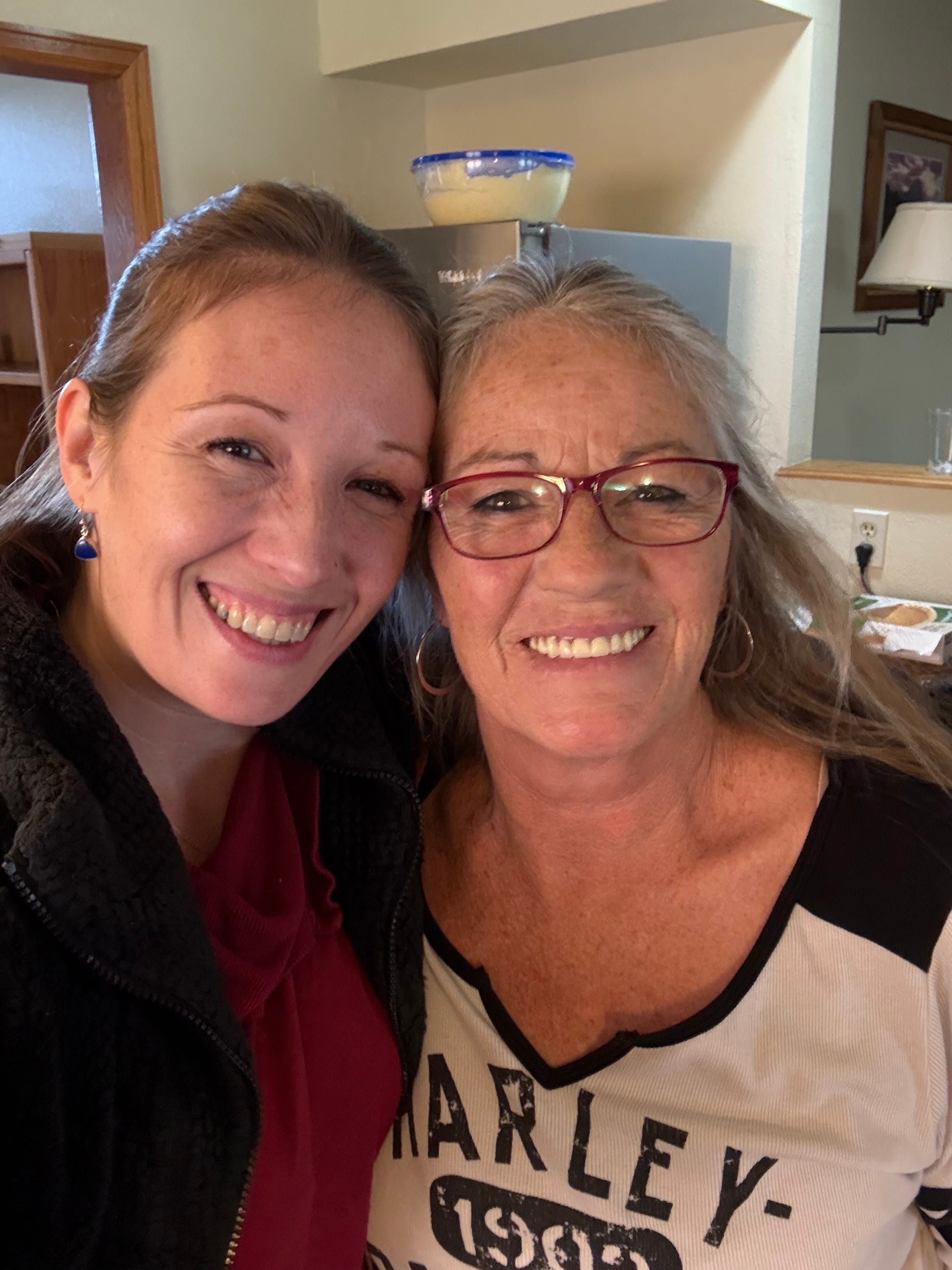
I’m grateful to my family for making accommodations for me without complaint while I stayed with them. One major change I noticed from the last few visits is that Bob turned off Fox news whenever I entered the room, and asked me what I wanted to watch in the evening rather than turning on shows about aliens that I had no interest in. He even gave me a beautiful Eiffel Tower necklace for Christmas and introduced me as “our daughter” to the group of friends on Friday. I didn’t say so directly, but I hope he knows how special it made me feel that he took ownership of me as his family and recognized that I’d love the Eiffel Tower necklace. I felt accepted.
When my brother promised to keep his speed under 85 mph this summer, he had compromised with me and kept to his word. And he didn’t smoke in the truck while I was with him.
My mother has gotten better and better at not taking it personally if I say “no thank you” to something she wants to give me or cook for me. And I’ve gotten better at recognizing that her reaction, or anyone else’s for that matter, to me saying what I want to say and being honest about what I want and don’t want to do, has more to do with them than with me.
I know that my family love and accept me for who I am. I’ll continue practicing being unapologetically myself and will let them be themselves. I’ll spend time with them when I can—in small doses. I imagine small doses of me is easier for them too.
Thank you for reading What We Have Learned
If you’d like to support my work, please:
Click the ❤️ below to indicate you like what you read
Leave a comment
Share this with a friend who might like to read it
Subscribe to get posts straight to your inbox each week.
I write better when I’m sipping wine or tea.
Related posts:


Traveling Through Time

You know that scene from Titanic, where old Rose sees the shipwrecked ballroom and flashes back to the grandeur of the ship and people on it when she was young?
Thank you, I love your openness.