
Leaps of Faith
Taking action when there are no guarantees of a favorable outcome


Teach Me, World
When Heidi was accepted to a college in another state, she thought it was a pipe dream to go. She was married, with two children, and a family around her in New Mexico. They were barely getting by financially, and her husband had only recently secured a job where he finally felt appreciated by his employers.
About a year before, an advisor at the community college Heidi was attending in Albuquerque urged her to apply to universities. She was about to earn her third associate’s degree, which, as the advisor explained, was a little ridiculous.
But Heidi was a first-gen student. She had no idea how these things were supposed to go. So the advisor walked her through it and encouraged her to apply to schools that ranked in the top ten for psychology programs.
“I can’t move out of state,” She had said to her advisor, somewhat appalled at the very suggestion. “I have a family.”
“So take them with you.”
When Heidi didn’t get into any of the top ten schools, she enrolled at the University of New Mexico, where she had assumed she would go anyway. But her advisor urged her to keep applying for transfer to better schools.
After another round of applications, she was faced with an unexpected decision. Attend the University of Oregon or the University of Colorado Boulder? Or stay at the University of New Mexico?
“Go to Oregon,” her advisor said. “Believe me, you’ll fit right in there. Those are your people.”
“We aren’t actually going, are we?” Her husband asked when she told him she’d been accepted.
They had no money—no nest-egg, safety net, or savings. Neither school was offering scholarships, or at least not enough to cover the out-of-state tuition she would have to pay.
In February, just before the Spring quarter, her husband quit his job, and they drove up to Eugene, Oregon, with nothing more than their tax return.


For the first month, they couldn’t find employment.
Eventually, they both found full-time work. It wasn’t enough to pay housing costs plus tuition, let alone feed their kids and pay for their daycare and after-school care. But then, miracle of miracles, Heidi was accepted into the Ronald E. McNair Scholars program that would cover the gap in her tuition that she currently had to pay out of pocket each month (after loans).


Marisha is also a first-generation college student and graduate. She came from a low-middle-class family in a small town. She was a top performer in school and top ten in her class, but her parents were jumping in blind with her while trying to navigate the complexities of applying to universities and finding scholarships or grant money to support her further education. Luckily, with her mom’s help and persistence, she was able to secure grant money to cover half of her tuition; the other half was taken out on loans.
Marisha’s parents could not afford to support her living expenses, so it was up to her to work and cover her rent, utilities, food, and gas, along with other basic necessities. Marisha had dreamt of moving out of her hometown of San Angelo, Texas, but her parents feared she wouldn’t be able to survive.
“You need to prove you can make it on your own here first, before we can allow you to move away,” her parents demanded.

After two years of feeling captive in a world too small for her curiosity, she decided enough was enough and moved four and a half hours away to Dallas, transferring to the University of North Texas. Her parents were not pleased with her decision and fully cut her off from the little help they were able to provide.
She had no idea how she would get by, but knew she had the tenacity to figure it out once she got there.
Little did Marisha know that after her first year away, she would be deep in credit card debt and transferring once more to a third school, Texas State University, that would eventually provide experiences that changed the trajectory of her future.
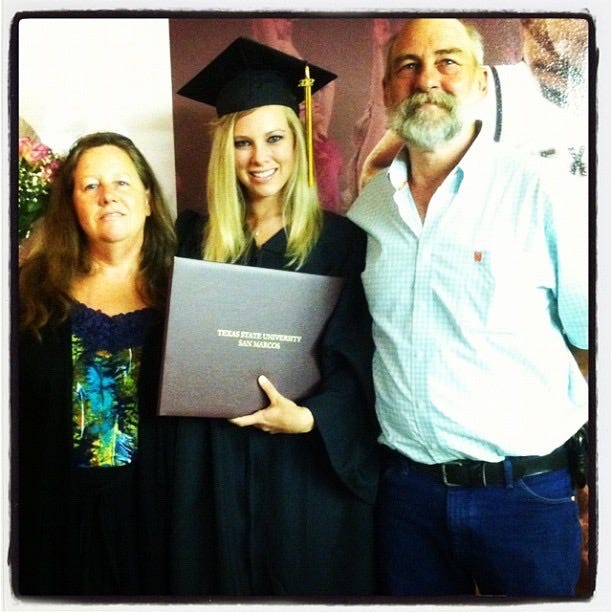
Moving away from home was the first leap of faith that substantially changed both Heidi’s and Marisha’s lives. And although the struggle was real, they never regretted it.
Moving Through Uncertainty
A Leap of Faith is commonly understood to be a decision that one makes, often a huge, life-altering decision, that involves a substantial amount of risk. The faith part is basically making up for the practical part that’s missing.

Fast forward to 2014. Heidi has graduated, and they have to move out of student housing. Because of the McNair program, she was no longer employed, and her husband’s salary wasn’t enough to afford for them to live in any place big enough for a family of four.
Heidi found a cute cookie-cutter duplex in a cul-de-sac that was just right.
She explained to the property manager that she had just graduated from college and was currently looking for work.
But she’d find it. She had no doubt.
The property manager approved their rental application, though they were, on paper, nowhere near qualified.
Within a month, Heidi found work, and they were able to pay their bills. Money was tight, but they were making it.


Marisha took another leap of faith the same year. She packed her things into a storage unit and took two large suitcases with her as she upended her life to finally move out of state to New York City.


She had a job secured before moving this time, but it was an entry-level job at a start-up, paying just enough to get by. This was nothing new to her, though. Living in Dallas, on her own for the first time since graduation, Marisha had saved every penny she could to one day execute her escape.
She was used to sacrificing things other people wouldn’t dare let go of. Including some of her closest friendships.
Let the Magic Happen
Psychology Today published an article in 2021 that highlights the powerful shift a leap of faith can bring to one’s life.
“The leap of faith involves having a basic belief in yourself and a fundamental trust in the vision of who, what, and where you want to be in the future.”—Jim Taylor, as quoted by John-Manuel Andriote in Psychology Today
Perhaps one of the most important things to understand is that leaps of faith come with consequences—some good, some bad.
In uncertain situations, emotions can run high. Excitement, perhaps, but also worry, fear, and anxiety.

But the long-term consequences might be exactly what the doctor ordered.
In a LinkedIn article from 2021 (not surprising given the existential crisis we were all thrown into by the pandemic), an author recounts the improvement in her quality of life after making a risky decision to leave her job.
This didn’t happen overnight or on a whim. This took a few years of planning, a leap of faith, and a lot of hard work, but sometimes you have to trust your heart and tell your brain to quiet down.—Laura Graham
She says that this leap of faith did all of these things for her:
Improved her mental health
Tested her resilience, leading to personal growth
Forced her to be more intentional, which increased her happiness
Led her to appreciate her life more than dreaming of a different one
Refocused her definition of success
Another Leap would take place when Heidi was accepted to graduate school in Southern California. This time, she and her husband applied for an apartment, sight unseen, while they were still living in Oregon. This way, we could list both of their current jobs to show that they were qualified.
Of course, they were quitting those jobs to move. But Equal Housing won’t allow a property management company to ask about that. Within weeks of their arrival, Heidi’s husband was hired as a maintenance technician for the property management company, which afforded them a free apartment. Heidi was hired in the admissions office of her school, where she would later be hired again as a full-time Assistant Director.


Marisha continued taking risks for months with little savings to lean on. After moving to NYC in April and realizing the job was a bit of a sham in June, she quit and moved down south to Miami Beach, then nine months later, headed west to Southern California, starting life over each time without a job or place to live. She spent a year living across four states with seven jobs.
The lessons she learned about herself over this chapter in life were priceless, the struggles and heartache taking her exactly where she belonged.


The More You Leap, the Better You Get at Leaping
There are more leaps that both Heidi and Marisha could recount. In fact, they are both currently living in one. Read about Heidi’s current leap here:

Or watch her talk about it:

Connect with Marisha and subscribe to follow along as pieces of her story unfold.

Every Leap of Faith has worked out. Sometimes not quite as expected. Sometimes better than expected. But they are the turbo thrusts of our lives.
Thank you for reading What We Have Learned
If you’d like to support my work, please consider:
Clicking the ❤️ below to indicate you like what you read
Sharing this post with others—either here on Substack by restacking, or by linking to it on social media channels
Subscribing or upgrading to a paid subscription
Feed the writing machine:
Related Posts
 | A guest post by
|
I had so much fun collaborating with you on this! ☺️
This is so beautifully interwoven 🧡 your stories help redirect the fear of the unknown into magical curiosity, and untimely make me feel braver!